

When you learn to read music, one of the most important elements is learning to read intervals on the staff. This is in reference to how close notes are to each other on the staff. The distance of a 2nd, 3rd, etc., refers to the proximity of the bottom note to the top, counting the bottom note as 1. (I don’t know why the 4th and 5th steps and the octave of the scale are referred to as perfect.)
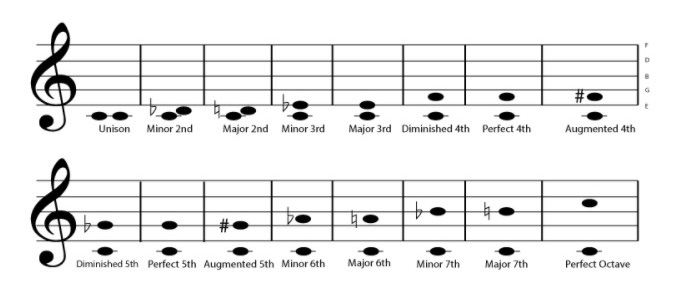

Learning memory tricks, or mnemonics, is very helpful in helping you learn to sightread. When I was in undergrad sightsinging, I was given a list of songs that corresponded to the different melodic intervals of a 12-note chromatic scale. The ones I remember the best were:
P4⬆️ “Here comes the bride”
P4⬇️: “Born free”
M6⬆️: “My Bonnie lies over the ocean”
(For a minor 6th, I always thought of it as “sad my Bonnie.”)
Nowadays, people don’t know the traditional folk songs the way they used to (never mind oldies like “Born Free”), so when I offer one of them as a mnemonic device, I’m met with blank stares.
But what y’all DO know is musical theater. So I sat down today and created this (which I edited because someone caught a mistake PLUS it gave me the chance to close a parentheses I’d missed):
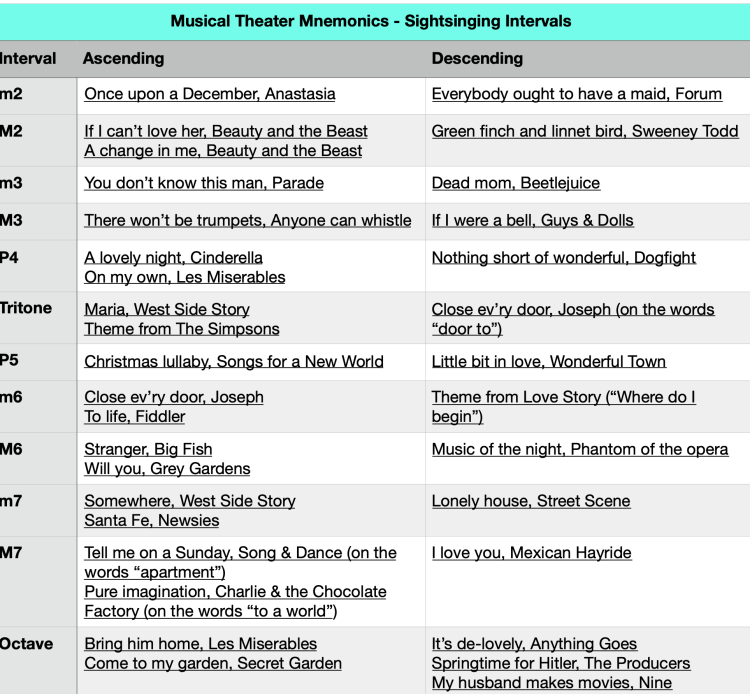
(Tritone = augmented 4th or diminished 5th. Also known as the Devil’s Interval.)

Click here to access the file along with YouTube links to each song: Sightreading with Musical Theater Intervals
Take the opportunity of this unplanned social isolation to work on your sightreading. Or on your improvisation skills. Or a monologue.